
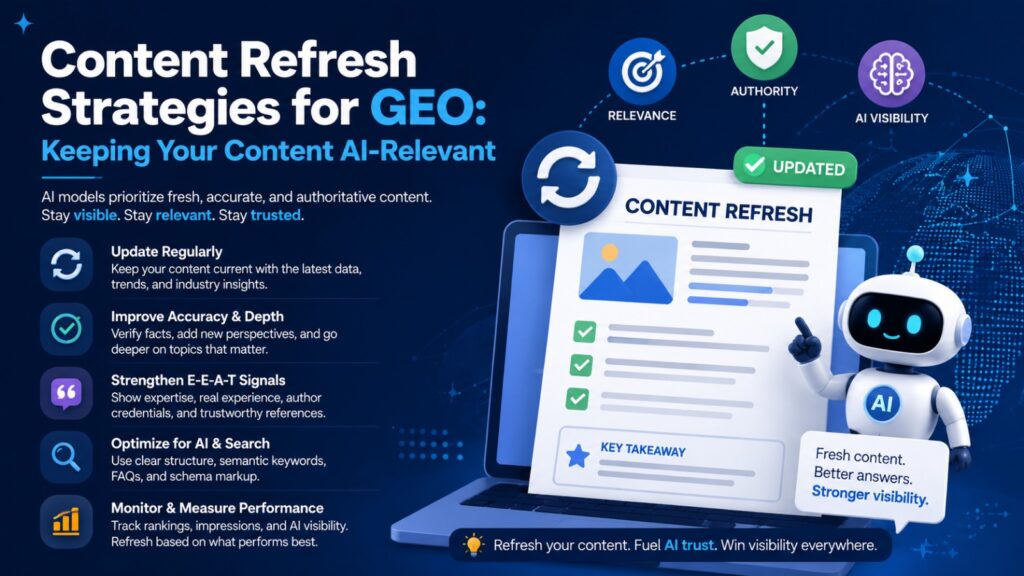
Publishing high-quality content is only the beginning of a successful Generative Engine Optimization (GEO) strategy. As AI search engines continue to evolve, they increasingly prioritize information that is accurate, current, and relevant. That means content maintenance has become just as important as content creation.
Regular GEO content updates help ensure your website remains a trusted source for AI-powered search platforms like ChatGPT, Gemini, Claude, and Perplexity. Fresh content signals that your information reflects the latest industry developments, improving both user experience and AI confidence.
In this guide, you’ll learn why content freshness matters, how AI evaluates updated content, and how to build an effective content refresh strategy that strengthens your long-term AI visibility.
Why Content Freshness Matters
AI search engines aim to deliver the most reliable and up-to-date answers possible. When users ask questions about rapidly evolving topics, outdated information can reduce trust and lead AI systems to prioritize more current sources.
Content freshness doesn’t simply mean changing a publication date. Instead, it involves improving the quality, accuracy, and completeness of existing content.
Regularly refreshed content helps:
- Maintain factual accuracy
- Reflect new industry trends
- Improve user trust
- Strengthen topical authority
- Increase opportunities for AI citations
- Support long-term organic visibility
For industries such as digital marketing, AI, technology, healthcare, and finance, keeping content current is especially important because information changes quickly.
Even evergreen content benefits from periodic updates to ensure examples, statistics, and recommendations remain relevant.
How AI Evaluates Updated Content
AI search engines analyze multiple signals to determine whether content is current and trustworthy.
Rather than relying solely on the publication date, AI systems evaluate whether meaningful improvements have been made to the page.
Some of the key update signals include:
- Revised statistics and research
- Updated examples and case studies
- Expanded explanations
- Improved topic coverage
- Newly added internal links
- Better structured data
- Enhanced readability
- Recent references to emerging trends
AI models also assess whether updated content provides additional value instead of making superficial edits. Pages that demonstrate genuine improvements are more likely to be trusted and recommended.
Consistently maintaining your content library also reinforces your website’s reputation as an authoritative source that stays aligned with industry developments.
GEO Content Audit Framework
A structured content audit helps identify which pages should be refreshed and what improvements will have the greatest impact.
Rather than updating every article at once, prioritize pages that generate traffic, target important keywords, or cover rapidly changing topics.
A GEO content audit should evaluate:
- Accuracy of information
- Outdated statistics
- Missing subtopics
- Internal linking opportunities
- Entity coverage
- Search intent alignment
- User engagement metrics
- AI relevance
Breaking the audit into specific tasks makes content maintenance more manageable and ensures each update provides measurable value.
Updating Statistics
Statistics are among the first elements users and AI systems evaluate when determining content credibility.
Replace outdated data with the latest available research, reports, and industry benchmarks. Be sure to update:
- Market trends
- Survey results
- Industry forecasts
- Performance metrics
- Adoption rates
- Technology developments
Whenever possible, include recent figures that strengthen your arguments and improve the reliability of your content.
Accurate statistics increase user confidence while helping AI systems identify your content as current and trustworthy.
Improving Entity Coverage
Entity coverage refers to how comprehensively your content discusses the people, organizations, technologies, concepts, and topics related to your primary subject.
As AI search relies heavily on semantic understanding, expanding entity coverage helps search engines better interpret your expertise.
When refreshing content, consider adding:
- Related concepts
- Industry terminology
- Relevant tools and technologies
- Associated organizations
- Common questions
- Supporting examples
- Connected subtopics
A broader entity network strengthens semantic relationships within your content, making it easier for AI systems to understand the full context of your article.
Refresh Schedules
Not every article requires the same update frequency. Creating a structured refresh schedule helps maintain quality while using resources efficiently.
Consider the following guidelines:
Monthly
- AI news
- Industry trends
- Product comparisons
- Technology updates
Every 3–6 Months
- SEO and GEO guides
- Best practice articles
- Strategy content
- Educational resources
Every 6–12 Months
- Evergreen tutorials
- Foundational concepts
- Beginner guides
- Glossaries
Pages covering rapidly evolving industries should always be reviewed more frequently than static informational content.
Establishing a consistent refresh calendar ensures your website remains competitive as AI search continues to evolve.
Measuring Results
Refreshing content is only effective if you measure its impact.
After publishing updates, monitor changes across both traditional SEO metrics and AI-specific visibility indicators.
Key performance metrics include:
- Organic traffic growth
- Keyword rankings
- AI-generated citations
- Time on page
- Click-through rate
- Bounce rate
- Internal link engagement
- Conversion rate
- Brand mentions
- Indexed pages
Compare performance before and after each update to determine which improvements generate the strongest results.
Maintaining a content update log can also help identify successful optimization patterns over time, allowing you to refine your GEO strategy more effectively.
Conclusion
Creating valuable content is only half of a successful GEO strategy. Consistent GEO content updates ensure your website remains accurate, authoritative, and relevant as AI search engines continue to evolve.
By regularly auditing your content, updating statistics, expanding entity coverage, and following a structured refresh schedule, you can strengthen your topical authority and improve your chances of being cited across AI-powered search platforms. In the rapidly changing world of AI search, keeping your content fresh is one of the most effective ways to maintain long-term visibility and trust.
Frequently Asked Questions
How often should content be updated for GEO?
The ideal update frequency depends on your industry. Fast-changing topics should be reviewed every one to three months, while evergreen content typically benefits from updates every six to twelve months. Regular reviews help maintain accuracy and AI relevance.
Does updating content improve AI visibility?
Yes. Meaningful content updates improve accuracy, expand topical coverage, and strengthen user trust. AI search engines are more likely to recommend content that reflects current information and demonstrates ongoing maintenance.
Which pages should be refreshed first?
Start with high-traffic pages, articles targeting valuable keywords, content with declining performance, and pages covering industries where information changes frequently. Updating these pages often delivers the greatest impact.
What signals indicate content is outdated?
Outdated statistics, broken links, obsolete examples, missing industry developments, declining search performance, and inaccurate recommendations are common indicators that content should be refreshed.
How can I track the impact of content updates?
Monitor metrics such as organic traffic, keyword rankings, AI-generated citations, user engagement, conversions, branded searches, and internal link performance before and after publishing updates. Comparing these metrics over time helps measure the effectiveness of your content refresh strategy.